Nainital is one of the most charming hill stations in India, located in the Kumaon region of Uttarakhand. Surrounded by lush green hills and pine forests and centered around the serene Naini Lake, Nainital is often called the “Lake District of India.” It is a perfect destination for nature lovers, honeymooners, families, and solo travelers.
Culture of Nainital
The culture of Nainital is a beautiful blend of Kumaoni traditions, Himalayan lifestyle, and colonial influence. Rooted deeply in nature and spirituality, the cultural life of Nainital reflects simplicity, respect for the environment, and strong community values. Over the years, tourism has added diversity, making Nainital culturally rich and welcoming.
Indigenous Kumaoni Culture
The native people of Nainital belong mainly to the Kumaon region of Uttarakhand. Their culture is closely connected to nature, agriculture, and local deities.
Key Cultural Values
- Deep respect for mountains, forests, and rivers
- Strong family and community bonds
- Simple and sustainable lifestyle
- Spiritual beliefs linked to local gods and goddesses
Language of Nainital
- Kumaoni is the traditional local language
- Hindi is widely spoken and understood
- English is commonly used in education, tourism, and administration
This multilingual environment makes Nainital comfortable for both Indian and international tourists.
Festivals Celebrated in Nainital
Festivals play an important role in the cultural life of Nainital.
Major Festivals
- Nanda Devi Mahotsav: The most important festival, dedicated to Goddess Nanda Devi, celebrated with grand processions, folk music, and rituals
- Sharadotsav: A cultural festival featuring folk dances, music, and local art
- Harela: Celebrated to mark the onset of monsoon and greenery
- Diwali & Holi: Celebrated with local traditions and community gatherings
Folk Music & Dance
Kumaoni folk music reflects daily life, love, nature, and devotion.
Popular Folk Dances
- Chholiya Dance: A traditional sword dance
- Jhoda & Chanchari: Group dances performed during festivals
- Jagar: Ritualistic singing to invoke local deities
Traditional musical instruments include dhol, damau, turri, and ransingha.
Traditional Clothing
- Men: Kurta-pajama, dhoti, and woolen caps
- Women: Ghagra, sari, and traditional jewelry
- Woolen shawls and handmade sweaters are common due to cold weather
Traditional dress is mostly seen during festivals and ceremonies.
Food Culture of Nainital
Food in Nainital is simple, nutritious, and locally sourced.
Popular Kumaoni Dishes
- Aloo Ke Gutke
- Bhatt Ki Churkani
- Gahat (Kulath) Dal
- Mandua (Ragi) Roti
- Bal Mithai & Singori (sweets)
These dishes reflect the agricultural lifestyle of the region.
Art, Handicrafts & Markets
Local artisans create:
- Woolen garments
- Wooden handicrafts
- Handmade candles
- Local jams, pickles, and herbal products
These items are sold mainly on Mall Road and Tibetan Market.
Colonial Influence on Culture
British rule left a strong imprint on Nainital’s culture:
- Colonial-era schools and churches
- English-style clubs and bungalows
- Structured town planning
This influence blends harmoniously with Kumaoni traditions.
Spiritual & Religious Life
Religion plays an important role in daily life.
- Naina Devi Temple is a major spiritual center
- Local village deities are worshipped through rituals and fairs
- Nature is considered sacred
Lifestyle & Hospitality
- People of Nainital are known for warm hospitality and politeness
- Tourism-driven lifestyle promotes cultural exchange
- Slow-paced life compared to cities
History of Nainital – From Mythology to British Era and Modern Times
Nainital, the famous hill station of Uttarakhand, has a rich and layered history that blends ancient mythology, indigenous Kumaoni culture, British colonial influence, and modern tourism development. Its past is deeply connected to religion, nature, and colonial administration, making Nainital not just a scenic destination but also a place of historical importance.
Ancient & Mythological History of Nainital
The history of Nainital begins with Hindu mythology. According to legend, Nainital is one of the 51 Shakti Peethas.
Mythological Belief
It is believed that when Goddess Sati immolated herself, Lord Shiva carried her body across the universe. During this journey, different parts of her body fell at various places. At Nainital, her eyes (Naina) are said to have fallen, giving rise to the sacred Naini Lake.
Because of this belief, the Naina Devi Temple near the lake holds immense religious significance and has been a center of worship for centuries.
Early Human Settlements & Kumaoni Rule
Before British discovery, the region around Nainital was inhabited by local hill communities belonging to the Kumaon region.
Katyuri & Chand Dynasties
- The area was once part of the Katyuri Kingdom (7th–11th century)
- Later ruled by the Chand dynasty, which governed Kumaon for several centuries
- These rulers promoted temple construction, agriculture, and trade routes
The local population practiced agriculture, animal husbandry, and forest-based livelihoods.
Discovery of Nainital by the British (1841)
The modern history of Nainital began in 1841, when P. Barron, a British sugar trader, visited the area while touring the hills of Kumaon.
British Settlement
Barron was inspired by the beauty of the lake and surrounding hills and wrote to British authorities recommending Nainital as a hill station similar to European lake towns.
Soon after, British officials started developing the area as a summer retreat to escape the heat of the plains.
Development as a British Hill Station
By the mid-19th century, Nainital was transformed into a planned hill town.
Key Developments
- Construction of bungalows, churches, schools, and clubs
- Introduction of Mall Road along the lake
- Establishment of educational institutions like Sherwood College and St. Joseph’s College
- English-style town planning and architecture
Nainital became the summer capital of the United Provinces (present-day Uttar Pradesh) during British rule.
The 1880 Landslide – A Major Historical Event
One of the most tragic events in Nainital’s history occurred on 18 September 1880.
The Landslide Disaster
- A massive landslide struck Alma Hill
- Around 151 people lost their lives
- Many buildings were destroyed
Aftermath
- The British administration cleared the hill area
- It was converted into a flat ground, now known as The Flats
- New construction rules were introduced to prevent future disasters
This event shaped modern town planning in Nainital.
Cultural & Social Life During British Rule
During colonial times, Nainital developed a vibrant social life.
- British clubs, balls, and social gatherings
- Horse riding, boating, and walking trails
- Interaction between British officials and local Kumaoni people
Despite British dominance, local culture, festivals, and religious traditions continued to thrive.
Role of Nainital in India’s Freedom Movement
Though primarily a British administrative town, Nainital also witnessed activities related to the Indian freedom struggle.
- Local leaders supported nationalist movements
- Public gatherings and discussions took place
- Gradual rise of political awareness among locals
After independence in 1947, Nainital became part of Uttar Pradesh.
Nainital After Independence
Administrative Importance
- Continued as a major district headquarters
- Served as a cultural and educational center in Kumaon
Tourism Growth
- Improved road and rail connectivity
- Development of hotels, markets, and tourist attractions
- Rise in domestic tourism
In 2000, Nainital became part of the newly formed state of Uttarakhand.
Modern Nainital
Today, Nainital is:
- A leading tourist destination
- An important educational hub
- A blend of heritage and modern tourism
The town still preserves its colonial buildings, traditional temples, and natural beauty, while adapting to modern needs.
Historical Landmarks of Nainital
- Naina Devi Temple
- St. John’s Church
- Raj Bhavan (Governor’s House)
- Mall Road
- The Flats
- Sherwood College
These landmarks reflect different phases of Nainital’s history.
Why Nainital is Famous
- Beautiful Naini Lake
- Pleasant weather throughout the year
- Scenic viewpoints and cable car rides
- Colonial-era architecture
- Perfect mix of spirituality, nature, and adventure
Top Places to Visit in Nainital
1. Naini Lake
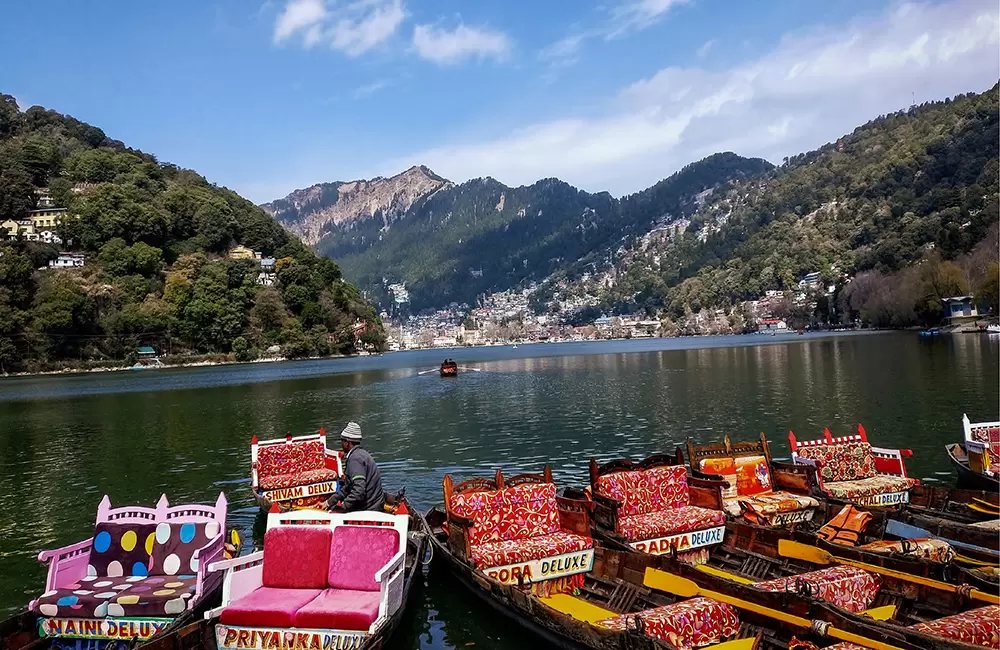
The heart of the city, Naini Lake is ideal for boating, photography, and evening walks. The reflection of hills and lights at night makes it magical.Naini Lake is the heart and main attraction of Nainital, Uttarakhand. Surrounded by lush green hills and the lively Mall Road, this natural freshwater lake is believed to be shaped like an eye. According to Hindu mythology, it is a Shakti Peetha, where the eyes (Naina) of Goddess Sati fell, giving the lake its name.
The lake is famous for boating, peaceful walks, and stunning reflections of the surrounding mountains, especially during sunrise and sunset. With colorful paddle boats, cool mountain air, and a calm atmosphere, Naini Lake perfectly captures the charm and beauty of Nainital, making it a must-visit spot for every traveler.
2. Naina Devi Temple
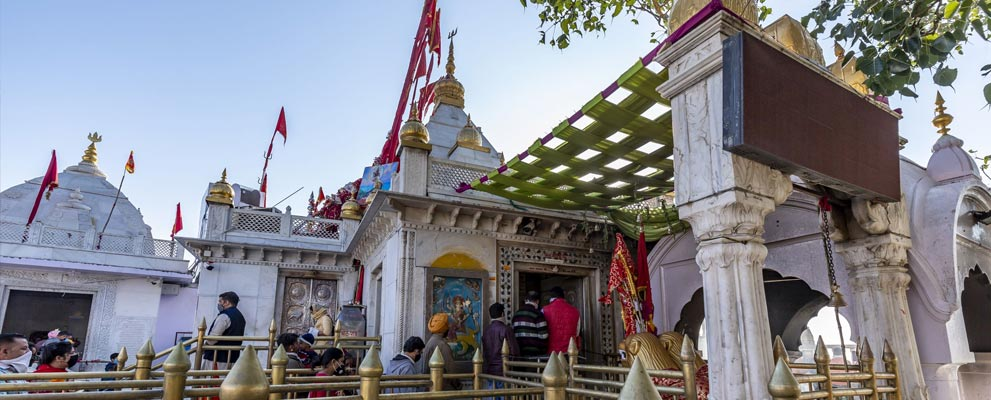
Located near the lake, this sacred temple is dedicated to Goddess Naina Devi and attracts devotees from across India.Naina Devi Temple is one of the most sacred and important religious sites in Nainital, Uttarakhand. Located on the northern shore of Naini Lake, the temple is dedicated to Goddess Naina Devi, an incarnation of Goddess Sati. According to Hindu mythology, this is the place where the eyes (Naina) of Goddess Sati fell, making it a revered Shakti Peetha.
The temple is known for its peaceful atmosphere, spiritual significance, and beautiful surroundings. Devotees and tourists visit the temple to seek blessings and experience calmness amidst the scenic beauty of Nainital.
3. Mall Road
Mall Road is the most happening place in Nainital. It is perfect for shopping, street food, cafes, and evening strolls.
4. Snow View Point
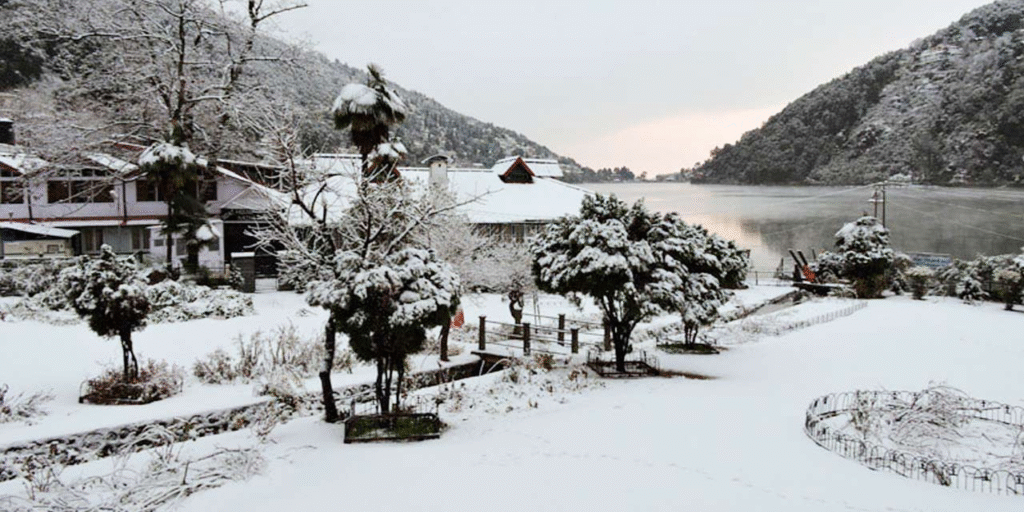
Accessible by cable car, Snow View Point offers stunning views of the snow-covered Himalayan peaks, especially Nanda Devi.Mall Road is the most popular and lively area of Nainital, running alongside the beautiful Naini Lake. It is the main hub for shopping, dining, and evening walks in the town. Lined with shops, cafés, restaurants, and hotels, Mall Road offers everything from local handicrafts and woolen clothes to street food and souvenirs.
With stunning lake views, cool mountain air, and a vibrant atmosphere, Mall Road is the perfect place to experience the charm of Nainital and enjoy a relaxed stroll with family and friends.
5. Tiffin Top (Dorothy’s Seat)
A popular picnic spot that offers panoramic views of Nainital town and surrounding mountains.Tiffin Top, also known as Dorothy’s Seat, is a famous viewpoint in Nainital that offers breathtaking panoramic views of the town, Naini Lake, and surrounding Himalayan hills. Located at an altitude of about 2,290 meters, it is a popular picnic spot and photography destination.
The viewpoint can be reached by a short trek or horse ride, making it an enjoyable experience for visitors. The calm environment and stunning scenery make Tiffin Top a perfect place to relax and enjoy nature.
6. Eco Cave Gardens
A fun attraction for families and kids, featuring interconnected caves and hanging gardens.Eco Cave Gardens is a unique and popular tourist attraction in Nainital, especially loved by families and children. It is a cluster of interconnected natural caves shaped like animals, such as tiger, panther, and bats, connected by narrow pathways and hanging gardens.
The site offers a fun and adventurous experience along with beautiful views of the surrounding hills. Eco Cave Gardens also promotes environmental awareness, making it an interesting place to explore nature and adventure together.
7. Raj Bhavan (Governor’s House)
A beautiful colonial building with a large golf course, showcasing British architectural style.Raj Bhawan, also known as the Governor’s House, is a magnificent colonial-era building in Nainital, Uttarakhand. Built in 1899, it served as the residence of the British Governor and now functions as the official residence of the Governor of Uttarakhand during summer.
Surrounded by lush gardens and a historic golf course, Raj Bhawan showcases elegant British architecture. Guided tours allow visitors to explore its heritage, making it an important historical and architectural landmark of Nainital.
Things to Do in Nainital
- Boating in Naini Lake
- Cable car ride to Snow View Point
- Trekking and nature walks
- Shopping for candles, woolens, and handicrafts
- Enjoying local Kumaoni food
- Photography and sunrise/sunset views
Best Time to Visit Nainital
- March to June: Best for sightseeing and pleasant weather
- July to September: Monsoon season, lush greenery but occasional landslides
- October to February: Cold weather, perfect for winter lovers and honeymooners
How to Reach Nainital
- By Air: Nearest airport is Pantnagar (about 70 km)
- By Train: Nearest railway station is Kathgodam (34 km)
- By Road: Well connected by road from Delhi, Dehradun, and nearby cities
Local Food to Try in Nainital
- Aloo Ke Gutke
- Bhatt Ki Churkani
- Momos and street snacks on Mall Road
- Bal Mithai (famous Kumaoni sweet)
Shopping in Nainital
- Handmade candles
- Woolen clothes
- Wooden handicrafts
- Local souvenirs from Tibetan Market and Mall Road
Where to Stay in Nainital
Nainital offers accommodation for every budget:
- Luxury lake-view hotels
- Mid-range family hotels
- Budget guest houses and homestays
Conclusion—Why You Should Visit Nainital
Nainital is a perfect blend of natural beauty, spirituality, colonial charm, and peaceful vibes. Whether you are looking for a romantic getaway, a family vacation, or a relaxing break from city life, Nainital promises unforgettable memories. Its scenic landscapes, cool climate, and welcoming atmosphere make it one of the best hill stations in India.
Online Travel & Tour Package Websites
These let you compare prices, itineraries, and book complete Nainital packages (hotel + transport + sightseeing):
1. TravelTriangle – Offers many customizable Nainital holiday packages (various durations & prices) with hotel and transfers included. TravelTriangle.com
2. MakeMyTrip – Has a variety of Nainital tourism deals starting from affordable prices, including family and weekend getaway packages. MakeMyTrip
3. Thrillophilia – Curated Nainital packages under ₹30,000 with hassle‑free bookings and sightseeing. https://www.thrillophilia.com/
4. Trawell.in – Offers Nainital tour packages (2–5 days) with accommodation and sightseeing options. Trawell.in
5. Direct Tour Operator Sites (e.g., Ritual Holidays, AvaniHolidays, NainitalTourPackage.com) — you can fill inquiry/booking forms directly on their websites to plan and confirm your trip. Ritual Holidays+2Avaniholidays+2
🧳 Travel Agencies & Local Tour Operators
You can also book through travel agencies if you prefer personalized planning:
- Local or online travel agents (like Suniti Tour & Travels in Nainital) can create a tailor‑made itinerary with hotels, transport, guides, etc. Suniti Tour
- Many cities have travel shops that handle hill‑station tours — search online “travel agency near me” + Nainital package (e.g., in Jaipur or Delhi).
🚆 IRCTC Tour Packages
Indian Railway’s tourism arm (IRCTC) sometimes offers combined train + hotel + sightseeing packages to Nainital from various cities — you can book these on the IRCTC Tourism website. The Times of India
Top Reasons to Visit Nainital:
- Scenic Beauty – Naini Lake, hills, and panoramic views.
- Tourist Spots – Naina Devi Temple, Mall Road, Eco Cave Gardens.
- Adventure – Boating, trekking, ropeway rides.
- Pleasant Climate – Cool and refreshing, perfect summer getaway.
- Culture & Leisure – Kumaoni food, handicrafts, and peaceful atmosphere.
Nainital is perfect for nature lovers, adventure seekers, and those wanting a relaxing escape.
Nainital is a charming hill station that offers breathtaking views, serene lakes, adventure, and rich culture. Perfect for a relaxing getaway or a fun-filled trip, it’s a destination that leaves every visitor with unforgettable memories.