Kerala – In-Depth Overview
Kerala is a state in the south-west of India that is famous for its natural beauty, a large number of literate people, rich cultural traditions, and good social development indicators. Kerala is also known as “God’s Own Country.”
Geography & Climate
Location: Southwestern coast of India, Arabian Sea coastline
Capital: Thiruvananthapuram
Largest Urban Area: Kochi
Area: Approximately 38,863 sq km
Terrain:
Western Ghats (Mountain ranges to the east)
Mid-land hills and plantations
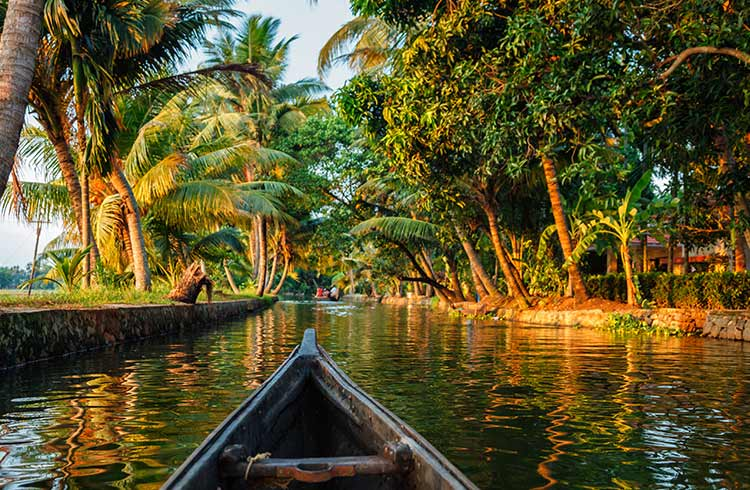
Coastal plains and backwaters
Climate
Tropical climate
Heavy monsoon rains (June–September: Southwest Monsoon; October–November: Northeast Monsoon)
Pleasant weather from November to February
People & Society
Population: ~35 million
Literacy Rate: ~96% (highest in India)
Official Language: Malayalam
Religions: Hinduism, Islam, Christianity (peaceful coexistence and strong interfaith culture)
Kerala has one of the highest Human Development Index (HDI) values in India, with excellent healthcare and education facilities.
History of Kerala
Early & Ancient Kerala (Prehistory – 8th Century CE)
Prehistoric & Megalithic Period
Rock carvings of Neolithic people (c. 6000 BCE or earlier) have been discovered in Edakkal Caves, Wayanad. The Iron Age (c. 1000 BCE) saw megalithic funerals, Neolithic pottery, and ironware, signifying the existence of agricultural settlements.
The Chera Dynasty & Sangam Period (c. 300 BCE – 300 CE)
Kerala was a part of the ancient Tamil land of Tamilakam, ruled by the Chera Dynasty. Literary texts from Sangam Literature speak of the Chera rulers Uthiyan Cheralathan.
The Indo-Roman trade was centered in the harbor town of Muziris (possibly near Kodungallur, the present-day name for the ancient city).
Roman coins, amphorae, and Mediterranean artifacts reflect the active trade in spices, particularly black pepper, dubbed “black gold.”
The Periplus of the Erythraean Sea (1st century CE) records the active sea trade of Kerala.
The early Kerala society was multicultural, with contacts between the Dravidian-speaking locals, Greeks, Romans, Arabs, and West Asians.
The Emergence of Religious & Cultural Pluralism (1st – 8th Century CE)
Kerala emerged as one of the most religiously plural provinces of India:
There is a tradition of Thomas the Apostle’s arrival in 52 CE, establishing the first Christian settlements (Syrian Christians).
Jewish settlers arrived in Kodungallur, later linked to the Paradesi Synagogue, which was constructed in 1568.
Arab merchants brought Islam to Kerala in the 7th century, resulting in some of the oldest mosques in India, such as the Cheraman Juma Mosque.
Hinduism developed in its own distinct manner with robust temple-based Brahmin settlements (Namboodiris) and distinct social stratification.
The Age of Maritime Trade & European Contact (13th–18th Century)
Zamorin of Calicut
The ruler of Calicut (Kozhikode), known as the Zamorin, dominated the spice trade.
Portuguese Arrival (1498)
In 1498, Vasco da Gama arrived at Kozhikode, marking the beginning of direct sea trade between Europe and India.
The Portuguese impact altered politics, religion, and trade.
Dutch & British Period
The Dutch East India Company defeated the Portuguese in Kerala in the 17th century.
The British slowly acquired control through agreements and wars.
Rise of Travancore & Mysore Invasions (18th Century)
Marthanda Varma & Travancore
King Marthanda Varma (1729-1758) made Travancore a strong kingdom.
Defeated the Dutch in the Battle of Colachel (1741).
Reformed the military and established a centralized administration.
Mysore Rule
Kerala was invaded by Hyder Ali and Tipu Sultan of Mysore, which had a political and demographic impact on Malabar.
British Rule & Social Reform (19th-Early 20th Century)
Kerala was partitioned into:
Malabar (under direct British rule, part of Madras Presidency)
Cochin (princely state)
Travancore (princely state)
Social Reform Movements
Kerala experienced significant social reform movements against the oppression of castes:
Sree Narayana Guru preached social equality and education.
Ayyankali: Dalit rights and education.
Temple Entry Proclamation (1936) in Travancore: allowed lower castes to enter Hindu temples.
Kerala achieved high literacy and social awareness during this era.
Freedom Struggle & Formation of Kerala (20th Century)
Involvement in the Indian freedom struggle under leaders influenced by Mahatma Gandhi.
Peasant and labor movements were strong, especially in Malabar.
In 1956, the state of Kerala was formed by uniting Travancore, Cochin, and Malabar through the States Reorganization Act.
In 1957, Kerala formed the world’s first democratic communist government under E. M. S. Namboodiripad.
Culture of Kerala
The culture of Kerala is very unique in the context of Indian culture. Kerala has a long coastline, a spice trade, religious pluralism, and a high literacy rate.
- Language & Literature
Malayalam
Malayalam is the official language of Kerala. It is a descendant of the Tamil language and emerged as a separate language in the 9th century.
Classical & Modern Literature
Thunchaththu Ezhuthachan – Known as the “Father of Modern Malayalam.”
Kumaran Asan, Vallathol Narayana Menon, and Ulloor S. Parameswara Iyer—Revival of modern poetry.
Vaikom Muhammad Basheer – Known for his simple and humanistic stories.
Malayalam cinema (Mollywood) is famous for its realistic stories and social theme.
- Religion & Social Harmony
Kerala has a diverse religious background:
Hinduism
Islam
Christianity
Small Jewish and Jain communities
Historical churches, mosques, and temples are found side by side. The Cheraman Juma Mosque is believed to be one of the oldest mosques in India. The Paradesi Synagogue represents the historical Jewish presence in Kerala.
Religious festivals are usually observed jointly.
- Festival: Onam
The largest festival in Kerala, associated with the legend of King Mahabali. It includes:
Pookalam (floral carpets)
Onam Sadhya (grand vegetarian feast)
Vallam Kali (boat races)
Thrissur Pooram
Held at Vadakkunnathan Temple, it features decorated elephants, percussion ensembles, and fireworks.
Other Festivals
Vishu (Malayalam New Year)
Eid
Christmas
- Performing Arts
Kerala has highly stylized classical art forms:
Kathakali
A dramatic dance theater known for elaborate costumes and facial expressions.
Mohiniyattam
A graceful classical dance traditionally performed by women.
Theyyam
A ritual art form of North Kerala combining dance, mime, and worship.
- Music
Sopana Sangeetham (temple music tradition)
Carnatic music influence
Rich film music tradition
Percussion ensembles like Chenda Melam
- Martial Arts
Kalaripayattu
One of the oldest martial arts in the world, believed to have influenced other Asian martial traditions.
- Architecture
Kerala architecture is suited to the heavy rainfall:
Sloping tiled roofs
Wooden carvings
Nalukettu (traditional courtyard homes)
The Padmanabhaswamy Temple shows classic Kerala-Dravidian temple architecture.
- Cuisine
Kerala cuisine is centered on rice, coconut, and spices.
Famous Dishes
Sadya (feast served on banana leaf)
Appam with stew
Puttu and Kadala curry
Malabar biryani
Karimeen (pearl spot fish)
Coconut oil and curry leaves are signature ingredients.
- Clothing
Men: Mundu (white dhoti)
Women: Kasavu saree (cream with golden border)
Traditional gold jewelry is common for festive occasions.
- Social Aspects of Kerala Culture
High literacy rates and education
Matrilineal societies (especially among Nairs and some Muslim communities)
Social reform movements
Influence of Gulf migration on modern living
- Backwaters & Lifestyle
Kerala’s backwaters, particularly in Alappuzha, are an integral part of everyday life and tourism. Houseboats and fishing villages define the coastal lifestyle.
Summary of Cultural Identity
Kerala’s cultural identity is based on:
Religious tolerance
Cultural refinement
Social reform and education
Maritime receptiveness to outside influences
Regional pride.
Comparison Between Kerala and Tamil Nadu Culture
Kerala and Tamil Nadu share deep historical roots in ancient Tamilakam, yet they evolved into distinct cultural regions over centuries.
1. Historical Background
| Aspect | Kerala | Tamil Nadu |
|---|---|---|
| Ancient Roots | Part of Tamilakam under the Chera Dynasty | Ruled by Chola Dynasty, Pandya Dynasty, and Pallavas |
| Language Evolution | Malayalam evolved from Tamil (around 9th century) | Tamil is one of the world’s oldest classical languages |
| Political Development | Many small kingdoms (Travancore, Cochin, Calicut) | Large centralized empires (especially Cholas) |
2. Language & Literature
Kerala
- Language: Malayalam
- Influenced by Sanskrit and Tamil
- Major figure: Thunchaththu Ezhuthachan
Tamil Nadu
- Language: Tamil (Classical language status)
- Rich Sangam literature tradition
- Major classical text: Tirukkural by Thiruvalluvar
Key Difference: Tamil literary history is older and continuous; Malayalam developed later as a distinct language.
3. Religion & Social Structure
Kerala
- Religious diversity: Hinduism, Islam, Christianity
- Early Christian and Muslim presence
- Matrilineal system (Marumakkathayam) among Nairs
- Temple entry reforms in 20th century
Tamil Nadu
- Strong Shaivite and Vaishnavite traditions
- Bhakti movement origins
- Historically more rigid caste structure
Key Difference: Kerala shows greater early religious pluralism; Tamil Nadu has stronger temple-centered Hindu traditions.
- Language & Literature
Kerala
Language: Malayalam
Influenced by Sanskrit and Tamil
Greatest figure: Thunchaththu Ezhuthachan
Tamil Nadu
Language: Tamil (Classical language status)
Rich tradition of Sangam literature
Greatest classical work: Tirukkural by Thiruvalluvar
Key Difference: Tamil literature is much older and continuous; Malayalam is a younger language.
- Religion & Social Structure
Kerala
Religious pluralism: Hinduism, Islam, Christianity
Early Christian and Muslim settlement
Matrilineal society (Marumakkathayam) among Nairs
Temple entry reforms in 20th century
Tamil Nadu
Rich Shaivite and Vaishnavite tradition
Bhakti movement origins
Historically more rigid caste system
Key Difference: Kerala is more religiously plural in early periods; Tamil Nadu has a stronger temple-based Hindu tradition.
- Temple Architecture
Kerala Style
Sloping roofs (because of high rainfall)
Wooden architecture
Example: Padmanabhaswamy Temple
Tamil Nadu Style
Tall gopurams (entrance towers)
Large stone structures
Example: Brihadeeswarar Temple
Key Difference: Kerala temples are small and adapted to the climate; Tamil temples are large and vertically impressive.
- Classical Dance & Performing Arts
Kerala
Kathakali (dance-drama)
Mohiniyattam
Theyyam (ritual performance)
Tamil Nadu
Bharatanatyam (classical dance)
Carnatic music hubs like Chennai
Key Difference: Kerala is more into theatrical dance-drama; Tamil Nadu is more into formal classical dance and music.
- Cuisine
Kerala
Coconut oil as base
Rice and seafood
Appam, puttu, sadya
Tamil Nadu
Sesame oil & ghee
Idli, dosa, sambar
Chettinad cuisine (spicy non-veg)
Key Difference: Kerala cuisine is dominated by coconut; Tamil cuisine is diverse and uses less coconut.
7. Clothing
Kerala
- Mundu (men)
- Kasavu saree (white with gold border)
Tamil Nadu
- Veshti (men)
- Kanchipuram silk sarees
8. Social Development
Kerala
- High literacy
- Strong social reform movements
- Communist political influence
Tamil Nadu
- Dravidian movement politics
- Strong cinema-political connection
9. Festivals
Kerala
- Onam
- Thrissur Pooram
Tamil Nadu
- Pongal
- Thaipusam
Overall Comparison Summary
| Feature | Kerala | Tamil Nadu |
|---|---|---|
| Language | Malayalam | Tamil |
| Architecture | Rain-adapted, wooden | Monumental stone temples |
| Religion | Diverse & plural | Strong Bhakti Hindu roots |
| Dance | Kathakali | Bharatanatyam |
| Politics | Left influence | Dravidian movement |
Final Insight
Kerala and Tamil Nadu share ancient roots but developed unique identities:
- Kerala → Maritime, pluralistic, socially reform-oriented
- Tamil Nadu → Temple-centered, linguistically proud, empire-driven heritage.
Cuisine of Kerala
The cuisine of Kerala is one of the most diverse in India, shaped by its tropical climate, long coastline, spice trade, and religious communities. Rice, coconut, spices, and seafood form the foundation of most dishes.
1. Core Ingredients
🥥 Coconut
Used in almost every form:
- Grated
- Coconut milk
- Coconut oil (main cooking medium)
🌾 Rice
Staple food served as plain rice or in forms like appam, puttu, and idiyappam.
🌶 Spices
Kerala was historically famous for pepper and cardamom. Common spices:
- Black pepper
- Cardamom
- Cloves
- Cinnamon
- Turmeric
2. Regional Variations
Malabar Cuisine (North Kerala)
Influenced by Arab traders.
- Malabar biryani
- Pathiri (rice flatbread)
- Seafood curries
Central Kerala
- Syrian Christian dishes like duck roast and beef ularthiyathu
- Appam with stew
Travancore (South Kerala)
- Traditional vegetarian dishes
- Temple-style cooking
3. Traditional Dishes
Sadya
A grand vegetarian feast served on a banana leaf, especially during Onam. Includes:
- Sambar
- Avial
- Thoran
- Olan
- Pachadi
- Payasam (dessert)
Breakfast Items
- Appam with vegetable or meat stew
- Puttu with kadala (black chickpea) curry
- Idiyappam (string hoppers)
Seafood
Kerala’s coastline makes fish central to its cuisine:
- Karimeen (pearl spot fish) fry
- Fish curry with tamarind
- Prawn roast
4. Religious Influences
- Hindu communities traditionally prefer vegetarian temple cuisine.
- Muslim cuisine (especially Malabar) includes biryani and meat dishes.
- Christian cuisine features beef, pork, and duck preparations.
This diversity makes Kerala cuisine richly layered.
5. Sweets & Desserts
Payasam
A sweet pudding made with rice, vermicelli, or lentils and jaggery or sugar.
Banana-based Snacks
- Pazham pori (banana fritters)
- Banana chips fried in coconut oil
6. Cooking Style
- Use of curry leaves for aroma
- Slow roasting of spices
- Balance of spicy, tangy, and mildly sweet flavors
- Coconut oil gives a distinctive taste
7. Influence of Spice Trade
Ancient ports like Muziris made Kerala a global spice hub. Arab, Portuguese, and Dutch contacts influenced cooking styles, especially in coastal regions.
What Makes Kerala Cuisine Unique?
✔ Heavy use of coconut
✔ Fresh seafood
✔ Banana-leaf serving tradition
✔ Blend of Hindu, Muslim, and Christian food cultures
✔ Strong spice identity.
Why Visit Kerala and When to Go
Kerala—often called “God’s Own Country”—offers a rare mix of backwaters, beaches, hills, wildlife, Ayurveda, and vibrant culture. Here’s why it’s worth visiting and the best time to plan your trip.
Why Visit Kerala?
🌴 1. Backwaters & Houseboats
Cruise the serene canals of Alappuzha or Kumarakom in a traditional kettuvallam (houseboat). It’s slow travel at its best—palm-lined waterways, village life, and fresh seafood.
🏔 2. Hill Stations & Tea Gardens
Escape to the cool hills of Munnar for rolling tea estates, misty valleys, and trekking. Nearby Eravikulam National Park is home to the endangered Nilgiri tahr.
🐘 3. Wildlife
Spot elephants and tigers at Periyar National Park or explore birdlife in the wetlands of Kumarakom.
🏖 4. Beaches
Relax at Varkala (cliffside views) or Kovalam for golden sands and sunsets over the Arabian Sea.
🎭 5. Culture & Festivals
Experience classical arts like Kathakali and vibrant temple festivals such as Thrissur Pooram at Vadakkunnathan Temple.
🧘 6. Ayurveda & Wellness
Kerala is famous for authentic Ayurvedic therapies, yoga retreats, and monsoon rejuvenation programs.
🍛 7. Cuisine
From Onam Sadya to Malabar biryani and seafood curries, Kerala’s food is rich, coconut-based, and spice-forward.
When to Visit Kerala?
☀️ 1. Winter (October – March) — Best Time
- Pleasant weather (18–30°C)
- Ideal for beaches, backwaters, wildlife, and sightseeing
- Peak tourist season
🌧 2. Monsoon (June – September) — Best for Ayurveda & Lush Scenery
- Heavy but beautiful rains
- Fewer crowds, greener landscapes
- Traditional Ayurvedic treatments are considered most effective during monsoon
🌤 3. Summer (April – May) — Budget Travel
- Hot and humid in coastal areas
- Cooler in hill stations like Munnar
- Good hotel discounts
Best Time Based on Your Interest
| Interest | Best Time |
|---|---|
| Houseboats & Beaches | Nov – Feb |
| Hill Stations | Sep – March |
| Ayurveda Retreat | June – Sept |
| Festivals (Onam) | Aug – Sept |
| Wildlife | Oct – April |
Quick Recommendation
If it’s your first visit, choose November to February for the best overall experience.
If you want a quiet, romantic, or wellness-focused trip, consider the monsoon.
Here are popular and trusted websites/apps you can use to plan and book a trip to Kerala (for hotels, tours, transport, houseboats, etc.):
Travel Booking & Packages
- MakeMyTrip – Flights, hotels, holiday packages
https://www.makemytrip.com/ - Cleartrip – Flights, hotels, trains, buses
https://www.cleartrip.com/ - Yatra – Complete travel booking (flights, hotels, buses, packages)
https://www.yatra.com/ - Goibibo – Hotels, flights, bus tickets, holiday deals
https://www.goibibo.com/ - EaseMyTrip – Flights & hotels with often low service charges
https://www.easemytrip.com/
Hotel & Stay Booking
- Booking.com – Hotels, resorts, homestays
https://www.booking.com/ - Agoda – Hotels and villas (good for international travelers too)
https://www.agoda.com/ - Airbnb – Homestays, unique stays, apartments
https://www.airbnb.co.in/ - OYO Rooms – Budget hotels across India including Kerala
https://www.oyorooms.com/
🚤 Houseboat & Local Experiences
- Kerala Tourism Official Site – Information and some listings for experiences
https://www.keralatourism.org/ - TripAdvisor Experiences – Day tours, experiences, houseboat reviews
https://www.tripadvisor.in/Attractions - Keralapackage.in – Kerala-specific tour packages and itineraries
https://www.keralapackage.in/ - Thrillophilia – Local tours, houseboats, activities
https://www.thrillophilia.com/
Train Tickets
- IRCTC (Indian Railways) – Book trains to Kerala
https://www.irctc.co.in/
Flight Deals
- Skyscanner – Compare cheap flights
https://www.skyscanner.co.in/ - Cleartrip / MakeMyTrip Flight Search – Domestic flight deals
Best Places to Visit in Kerala
Kerala offers beaches, backwaters, hill stations, wildlife, and cultural hotspots. Here are the top destinations you shouldn’t miss:
Hill Stations
1. Munnar
- Rolling tea plantations
- Cool climate & misty hills
- Visit Eravikulam National Park
- Ideal for honeymoon & nature lovers
2. Wayanad
- Waterfalls, caves & wildlife
- Explore Edakkal Caves
- Great for trekking
Backwaters
3. Alappuzha (Alleppey)
- Famous for houseboat cruises
- Peaceful canals & village life
4. Kumarakom
- Luxury backwater resorts
- Bird watching at Kumarakom Bird Sanctuary
Beaches
5. Varkala
- Cliffside beach views
- Cafés & sunset points
6. Kovalam
- Crescent-shaped beaches
- Popular for water sports
🐘 Wildlife & Nature
7. Periyar National Park
- Elephant & tiger reserve
- Boat safari in Periyar Lake
8. Thekkady
- Spice plantations
- Jungle trekking
Cultural & Historical Places
9. Kochi
- Chinese fishing nets
- Fort Kochi colonial charm
- Paradesi Synagogue
10. Thrissur
- Cultural capital of Kerala
- Famous Thrissur Pooram festival
11. Thiruvananthapuram
- State capital
- Visit Padmanabhaswamy Temple
Offbeat Destinations
12. Bekal
- Scenic beach & Bekal Fort
13. Ponmudi
- Less crowded hill station
- Ideal for short trips
Best Time to Visit
- October – March → Best weather
- June – September → Monsoon beauty & Ayurveda
- April – May → Good for hill stations
Quick Recommendations
- Honeymoon → Munnar + Alleppey
- Family Trip → Kochi + Thekkady + Kumarakom
- Adventure → Wayanad + Periyar
- Beach Relaxation → Varkala + Kovalam